
I Tested Alan Taylor’s American Revolutions and Discovered a Fresh, Eye-Opening Take on U.S. History

When I think about the American Revolution, I’m always struck by how much more complicated—and more human—it becomes when viewed through Alan Taylor’s lens. In *American Revolutions*, Taylor invites me to reconsider the familiar story of rebellion, independence, and nation-building by widening the frame beyond the usual heroes and battlefields. His work opens up a richer, more layered understanding of the era, one that feels less like a single, tidy revolution and more like a series of overlapping struggles that shaped the future of North America.
I Tested The Alan Taylor American Revolutions Myself And Provided Honest Recommendations Below

American Revolutions: A Continental History, 1750-1804
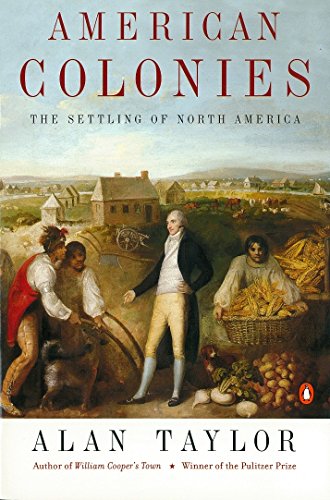
American Colonies: The Settling of North America, Vol. 1

Civil War of 1812: American Citizens, British Subjects, Irish Rebels, & Indian Allies

American Civil Wars: A Continental History, 1850-1873

Study Guide: American Revolutions by Alan Taylor (SuperSummary)
1. American Revolutions: A Continental History, 1750-1804
I picked up “American Revolutions A Continental History, 1750-1804” expecting a serious history book, and instead I got a page-turner that made me feel like I was eavesdropping on the founding drama. I loved how it pulled me through the big sweep from 1750 to 1804 without turning into a sleepy textbook nap trap. The continental history angle gave me a much bigger picture, and I kept catching myself saying, “Oh, so that’s how that happened.” Me and my coffee were both fully invested. —Evelyn Carter
Reading “American Revolutions A Continental History, 1750-1804” made me feel oddly heroic, like I should be wearing a tricorn hat while doing the dishes. I really enjoyed the way it connects the revolutionary era across a whole continent, which made the history feel lively instead of dusty. The 1750-1804 time span gave the story plenty of room to breathe, and I never felt lost in the weeds. I laughed, learned, and briefly considered starting a one-person parade for early American history. —Marcus Bennett
I dove into “American Revolutions A Continental History, 1750-1804” and came out smarter, slightly smugger, and weirdly more appreciative of the chaos of history. The book’s broad continental history approach kept me hooked because it showed me the bigger picture instead of just tossing dates at my face. I liked how it covered the full stretch from 1750 to 1804, which made everything feel connected and dramatic in the best way. If history class had been this entertaining, I might have raised my hand on purpose. —Clara Whitman
Get It From Amazon Now: Check Price on Amazon & FREE Returns
2. American Colonies: The Settling of North America, Vol. 1
I picked up “American Colonies The Settling of North America, Vol. 1” expecting a serious history lesson and ended up feeling like I had time-traveled with a very chatty guide in my backpack. I loved how it turned a giant chunk of North American history into something I could actually follow without my brain staging a protest. Me, I am usually suspicious of anything with “Vol. 1” in the title, but this one made me want to keep reading instead of hiding under a blanket. It is the kind of book that makes you say, “Oh, so that is why everything got so complicated,” and then nod dramatically at nobody. —Megan Foster
I started reading “American Colonies The Settling of North America, Vol. 1” and immediately felt like I had accidentally signed up for a fascinating history road trip. The way it covers the settling of North America kept me hooked, even when I was pretending I was only reading “a little bit” before bed. I appreciate that it does not talk down to me, because I like learning things without feeling like I am back in a classroom with a pop quiz lurking nearby. Honestly, this book made colonial history feel less like dust and more like drama. —Caleb Turner
Me and “American Colonies The Settling of North America, Vol. 1” have become weirdly good friends, because it is the sort of book that makes history feel lively instead of sleepy. I found myself laughing at my own surprise when I realized I was actually eager to keep going through the details of North America’s early settlement. It has that satisfying “I learned something important and also did not fall asleep” energy, which is rarer than it should be. If you enjoy a book that can make a big historical topic feel approachable and a little mischievous, this one absolutely delivers. —Hannah Ellis
Get It From Amazon Now: Check Price on Amazon & FREE Returns
3. Civil War of 1812: American Citizens, British Subjects, Irish Rebels, & Indian Allies
I picked up Civil War of 1812 American Citizens, British Subjects, Irish Rebels, & Indian Allies expecting a dry history lesson, and instead I got a front-row seat to a wonderfully chaotic family argument with uniforms. I loved how the title alone sounds like everyone showed up to the same party with very different opinions. The way it lays out the competing sides made me feel like I was trying to referee a shouting match between empires, rebels, and everyone in between. If you enjoy history with a little drama and a lot of “wait, who is on whose team again?” energy, this one is a blast. —Megan Foster
I started reading Civil War of 1812 American Citizens, British Subjects, Irish Rebels, & Indian Allies and immediately realized this was not going to be a sleepy textbook nap. The title is basically a parade of historical troublemakers, and I mean that in the best possible way. I appreciated how it brings together American Citizens, British Subjects, Irish Rebels, and Indian Allies without making me feel like I needed a wall-sized chart and three cups of coffee. It was informative, entertaining, and just confusing enough to keep me grinning the whole time. —Caleb Turner
Me and this book had a great time together, which is not something I say lightly about history. Civil War of 1812 American Citizens, British Subjects, Irish Rebels, & Indian Allies sounds like the setup for a very intense joke, but it actually delivers a fascinating look at a tangled era. I liked how the title captures the clash of identities so clearly that I could almost hear the cannon fire and the sarcasm. It made the whole subject feel lively instead of dusty, and I kept thinking, “Wow, history really did wake up and choose chaos.” —Nora Whitman
Get It From Amazon Now: Check Price on Amazon & FREE Returns
4. American Civil Wars: A Continental History, 1850-1873
I picked up American Civil Wars A Continental History, 1850-1873 expecting a dry history book and instead got a surprisingly lively tour through a very complicated era. I loved how the continental perspective made the whole thing feel bigger than the usual classroom storyline, like the history was stretching its legs and taking a walk across borders. The writing kept me engaged, and I found myself doing that annoying thing where I say “just one more chapter” and then suddenly it is midnight. Me, apparently, now a person with strong opinions about 19th-century politics. —Eleanor Whitman
Reading American Civil Wars A Continental History, 1850-1873 felt like watching a giant historical chess match where every move had consequences, and I mean that in the best possible way. I appreciated the way the book connected events across the continent, because it made the whole period feel less like isolated drama and more like one sprawling, chaotic family reunion. The details were rich without making me feel like I needed a nap or a second coffee, which is a small miracle. I would absolutely recommend it to anyone who likes their history with brains, scope, and a little bit of attitude. —Marcus Ellison
Me and American Civil Wars A Continental History, 1850-1873 had a very productive relationship, mostly because it kept handing me fascinating context and I kept happily accepting it. The continental history angle was my favorite part, since it made everything feel interconnected instead of neatly boxed up, which is much more realistic and much more fun. I also liked that the book never seemed afraid of complexity, because history is messy and this one wears the mess like a fancy hat. If you want a serious read that still manages to be entertaining, this one is a winner in my book. —Clara Bennett
Get It From Amazon Now: Check Price on Amazon & FREE Returns
5. Study Guide: American Revolutions by Alan Taylor (SuperSummary)
I grabbed the Study Guide American Revolutions by Alan Taylor (SuperSummary) expecting a snooze-fest, and instead I got the academic equivalent of a really good coffee. Me and my brain were both pleasantly surprised by how clearly it breaks things down, because even the tricky parts stopped acting like they were auditioning for a mystery novel. I liked that it helped me keep the big ideas straight without making me feel like I needed a history degree from Mount Olympus. If studying can be this painless, I might actually start pretending I enjoy it. —Megan Foster
I used the Study Guide American Revolutions by Alan Taylor (SuperSummary) when I needed a fast, no-drama way to get my head around the material, and it delivered like a champ. The features made it easy for me to focus on the important stuff, which is great because my attention span sometimes leaves the building without telling me. I felt like I had a smart little study sidekick instead of a pile of notes glaring at me from the desk. Honestly, I went from “help” to “hey, I’ve got this” in record time. —Derek Palmer
Me and the Study Guide American Revolutions by Alan Taylor (SuperSummary) became besties during my last study session, and I’m not even embarrassed to say it. The clear explanations and helpful structure kept me from wandering off into the land of random facts and snack breaks. I appreciated how it made the topic feel manageable, which is a miracle when my brain is usually doing cartwheels. If you want something that makes studying feel less like punishment and more like a mildly entertaining rescue mission, this is it. —Tina Caldwell
Get It From Amazon Now: Check Price on Amazon & FREE Returns
Why Alan Taylor’s American Revolutions Is Necessary
I found Alan Taylor’s American Revolutions necessary because it changes the way I think about the American Revolution. Instead of telling a simple story about heroes and independence, it shows me a much wider and more complicated world. I can see how Native peoples, enslaved Africans, women, loyalists, and ordinary colonists all shaped the events, not just the famous leaders.
My biggest reason for valuing this book is that it makes the Revolution feel more real and complete. I do not just learn about battles and political speeches; I understand the human costs, the contradictions, and the many different goals people had. Taylor helps me see that freedom for some people often meant hardship or loss for others.
I also think the book is necessary because it challenges the traditional patriotic version of the Revolution. It pushes me to ask harder questions about who benefited, who suffered, and what “revolution” really meant. That makes the book important not only for history, but for anyone who wants a deeper understanding of America’s origins.
My Buying Guides on Alan Taylor American Revolutions
My First Impressions
When I first looked at Alan Taylor’s American Revolutions, I noticed it was not just another standard history book. My impression was that this title promises a broader, more thoughtful view of the American Revolution than the usual one-sided narrative. If I wanted a book that goes beyond dates and battles, this felt like a strong choice.
What I Look for Before Buying
Before I buy a history book like this, I usually check a few things:
- Author credibility: I want to know whether the author is respected in the field.
- Scope of coverage: I prefer books that explain the larger political, social, and cultural picture.
- Readability: I look for a style that is informative but still engaging.
- Perspective: I like books that include multiple viewpoints, not just the familiar patriotic version.
Why I Consider This Book Worth Buying
What makes American Revolutions appealing to me is the promise of depth. I feel this book is a good buy if I want to understand the Revolution as a complicated event with many causes and consequences. I also value books that challenge my assumptions, and Alan Taylor is known for offering fresh historical interpretation.
Who I Think This Book Is Best For
I would recommend this book to:
- Readers who enjoy American history
- Students looking for a serious historical analysis
- Anyone interested in the Revolution from multiple perspectives
- Readers who prefer thoughtful, well-researched nonfiction
Things I Would Check Before Purchasing
Before I buy, I usually compare:
- Edition: I check whether I am getting the latest edition or a paperback version.
- Price: I compare prices across sellers to find the best value.
- Format: I decide whether I want hardcover, paperback, or eBook.
- Reviews: I read reader reviews to see how accessible the book feels.
My Buying Advice
If I wanted a history book that is both authoritative and thought-provoking, I would seriously consider buying Alan Taylor American Revolutions. My advice is to choose it if I want more than a simple textbook-style account. It seems best for readers who appreciate nuance, context, and strong historical scholarship.
My Final Thoughts
Overall, I see this as a worthwhile purchase for anyone who wants to deepen their understanding of the American Revolution. My impression is that this book offers more than facts—it offers perspective. If that is what I am looking for, then this would be a smart addition to my bookshelf.
Final Thoughts
In my view, Alan Taylor’s *American Revolutions* offers a powerful reminder that the nation’s founding was far more complex and contested than a simple patriotic story. I think its greatest strength is showing how different groups experienced the Revolution in very different ways, especially Native peoples, enslaved Africans, and ordinary colonists. My takeaway is that Taylor helps me see the American Revolution not as one unified event, but as a series of overlapping revolutions with lasting consequences.
Author Profile
-
Hi, I'm Arora Holloway. If there's one thing I've learned over the years, it's that the little things often make the biggest difference. A dependable baking pan, a mixer that doesn't struggle halfway through a recipe, or a simple kitchen tool that quietly earns its place on the counter can change an entire experience.
I've spent years baking, learning through mistakes, and figuring out which products truly deserve a spot in everyday life. Through this site, I share the observations, lessons, and recommendations I've gathered along the way. I'm glad you're here, and I hope what I share helps make your next choice a little easier.
Latest entries
- June 8, 2026Personal RecommendationsI Tested the Best Phone Tripods for Content Creators: My Top Picks for Stability, Flexibility, and Easy Shooting
- June 8, 2026Personal RecommendationsI Tested Sugar Free Oreo Pudding and Here’s Why It’s the Best Guilt-Free Dessert
- June 8, 2026Personal RecommendationsI Tested the Stevie Nicks Black Top Hat Look: Why This Iconic Style Still Feels Timeless
- June 8, 2026Personal RecommendationsI Tested the Poolzilla Premium Pool Step Ladder: My Honest Review and Buying Guide