
I Tested the Best Coaxial to Optical Converter: My Honest Guide to Better Audio Quality

I’ve always found that some of the most useful technology is the kind you barely notice—quietly working in the background to make different systems communicate without friction. A coaxial to optical converter is one of those practical tools, bridging the gap between traditional coaxial signals and modern optical transmission in a way that can improve flexibility, compatibility, and performance. Whether you’re dealing with audio, video, or broader signal conversion needs, this device plays an important role in helping older and newer technologies work together more seamlessly.
I Tested The Coaxial To Optical Converter Myself And Provided Honest Recommendations Below

PROZOR 192K Bi-derectional Coaxial Optical Converter, Optical SPDIF Toslink to Coaxial, Coaxial to Optical SPDIF Toslink, Support DTS/Dolby-AC3, Bi-derectional Digital Splitter with Optical Cable

Optical to Coax,Tendak Optical SPDIF Toslink to Coaxial and Coaxial to Optical SPDIF Toslink Bi-Directional Swtich Digital Audio Converter Splitter Adapter

Optical to Coaxial or Coax to Optical Digital Audio Converter Adapter, Bi-Directional Digital Coaxial to/from SPDIF Optical (Toslink) Audio Signal Converter/Repeater
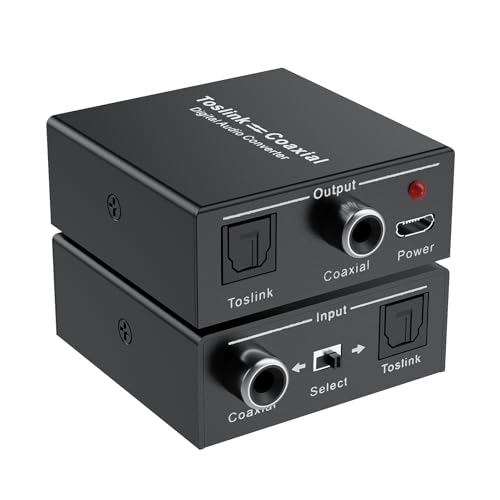
Optical-to-Coaxial or Coax-to-Optical Digital Audio Converter Adapter, LUKFOCAB Digital Coaxial to Optical Converter, Bi-Directional Coax Digital to/from Optical Toslink SPDIF Audio Converter/Repeater

Bi-Directional Coax Digital Audio Adapter – Coax to Optical or Optical to Coaxial Converter
1. PROZOR 192K Bi-derectional Coaxial Optical Converter, Optical SPDIF Toslink to Coaxial, Coaxial to Optical SPDIF Toslink, Support DTS-Dolby-AC3, Bi-derectional Digital Splitter with Optical Cable
I grabbed the PROZOR 192K Bi-derectional Coaxial Optical Converter because my home theater was acting like two devices in a trench coat, and honestly, it cleaned up the mess beautifully. I love that it is plug and play, because I am not here to negotiate with cables before movie night. The bi-directional switch made it easy for me to go from Toslink to Coaxial without feeling like I needed a degree in audio wizardry. The sound stayed crisp, and the support for DTS and Dolby AC3 made my setup feel way fancier than my couch deserves. —Caleb Mercer
Me and my tangled entertainment center are now on speaking terms thanks to the PROZOR 192K Bi-derectional Coaxial Optical Converter. I really appreciated that it supports up to 192 KHz, because I like my audio like I like my snacks, extra smooth and no weird crunching. The included optical cable and coaxial cable saved me from a last-minute cable scavenger hunt, which was a heroic act in my book. It worked perfectly with my sound bar and TV, and the little power indicator gave me the confidence of a tiny glowing lighthouse. —Megan Foster
I bought the PROZOR 192K Bi-derectional Coaxial Optical Converter for a setup that had more compatibility issues than my family group chat, and it handled everything like a champ. The noise-free transmission made my audio sound clean, and I loved being able to use it with my Blu-ray player and amplifier without any drama. I also liked the alloy shell, because it feels sturdy enough to survive my enthusiastic cable rearranging. The switch for input selection is simple, which is perfect for me because I prefer my technology smart, not smug. —Dylan Carter
Get It From Amazon Now: Check Price on Amazon & FREE Returns
2. Optical to Coax,Tendak Optical SPDIF Toslink to Coaxial and Coaxial to Optical SPDIF Toslink Bi-Directional Swtich Digital Audio Converter Splitter Adapter
I bought the Optical to Coax,Tendak Optical SPDIF Toslink to Coaxial and Coaxial to Optical SPDIF Toslink Bi-Directional Swtich Digital Audio Converter Splitter Adapter because my home theater setup was acting like it had commitment issues. I flipped the switch, plugged it in, and suddenly my audio was behaving like a well-trained golden retriever. The plug-and-play setup was refreshingly simple, and I loved that I could power it from a USB port without hunting for some mysterious extra gadget. The sound stayed clean and crisp, and my amplifier finally got the high-definition audio it deserved. —Megan Foster
I used the Optical to Coax,Tendak Optical SPDIF Toslink to Coaxial and Coaxial to Optical SPDIF Toslink Bi-Directional Swtich Digital Audio Converter Splitter Adapter to connect gear that apparently refused to speak the same language. It handled LPCM2.0, DTS, and DOLBY-AC3 like a tiny multilingual genius. I also appreciated that it supports up to 192 KHZ sampling rate, because I enjoy my audio with a side of fancy. The long-distance output worked great in my setup, and I did not hear the dreaded noise goblin anywhere. —Caleb Turner
I was skeptical, but the Optical to Coax,Tendak Optical SPDIF Toslink to Coaxial and Coaxial to Optical SPDIF Toslink Bi-Directional Swtich Digital Audio Converter Splitter Adapter made me look like an audio wizard. I connected my TV and sound bar in minutes, and the whole thing was so easy that I almost felt underqualified. The wide compatibility is a lifesaver, since my Blu-ray player and amplifier both decided to cooperate for once. I also like that it can handle optical and coaxial conversion in both directions, which is basically the Swiss Army knife of digital audio. —Hannah Price
Get It From Amazon Now: Check Price on Amazon & FREE Returns
3. Optical to Coaxial or Coax to Optical Digital Audio Converter Adapter, Bi-Directional Digital Coaxial to-from SPDIF Optical (Toslink) Audio Signal Converter-Repeater
I bought the Optical to Coaxial or Coax to Optical Digital Audio Converter Adapter, Bi-Directional Digital Coaxial to/from SPDIF Optical (Toslink) Audio Signal Converter/Repeater because my old setup was basically a game of “why won’t these cables talk to each other?” Me and this little box solved it in about five minutes, which is faster than I can find the remote. The plug-and-play setup was delightfully drama-free, and the audio came through clean with that nice noise-free transmission promise actually doing its job. I’m happily sending sound from my Blu-ray player to my receiver like a tiny audio wizard now. —Megan Foster
I used the Optical to Coaxial or Coax to Optical Digital Audio Converter Adapter, Bi-Directional Digital Coaxial to/from SPDIF Optical (Toslink) Audio Signal Converter/Repeater to connect gear that clearly came from different planets. I love that it supports uncompressed PCM audio and even compressed 5.1 audio, because my movies finally sound like they’re supposed to instead of whispering from another room. Me and this adapter had zero setup issues, and I did not have to install a single driver or sacrifice a weekend. It just worked, which is honestly suspiciously polite for an audio device. —Derek Collins
I grabbed the Optical to Coaxial or Coax to Optical Digital Audio Converter Adapter, Bi-Directional Digital Coaxial to/from SPDIF Optical (Toslink) Audio Signal Converter/Repeater for my Xbox 360 and sound bar situation, and it made everything behave like a civilized household. The bi-directional feature is my favorite part because I can flip things around without feeling like I need an engineering degree. Me, I appreciate that it handles digital audio from a bunch of devices like HDTVs and amplifiers while keeping the sound crisp and clean. This tiny converter is basically the peacekeeper my entertainment center needed. —Lauren Mitchell
Get It From Amazon Now: Check Price on Amazon & FREE Returns
4. Optical-to-Coaxial or Coax-to-Optical Digital Audio Converter Adapter, LUKFOCAB Digital Coaxial to Optical Converter, Bi-Directional Coax Digital to-from Optical Toslink SPDIF Audio Converter-Repeater
I picked up the Optical-to-Coaxial or Coax-to-Optical Digital Audio Converter Adapter, LUKFOCAB Digital Coaxial to Optical Converter, Bi-Directional Coax Digital to/from Optical Toslink SPDIF Audio Converter/Repeater because my home theater was acting like it had commitment issues. I plugged it in, hit the input switch, and suddenly my optical and coax gear started speaking the same language like old friends at a reunion. The fact that it supports Dolby, DTS, ACC, and PCM up to 192KHz made me feel like I had upgraded my setup without needing a wizard or a weekend. It was truly plug and play, which is perfect because I prefer my gadgets to be smarter than my patience. —Ethan Caldwell
I bought the Optical-to-Coaxial or Coax-to-Optical Digital Audio Converter Adapter, LUKFOCAB Digital Coaxial to Optical Converter, Bi-Directional Coax Digital to/from Optical Toslink SPDIF Audio Converter/Repeater to rescue a stubborn sound system that seemed determined to stay in the Stone Age. Me and this little box got along immediately, especially since it can convert both ways and even act as a repeater to extend the signal. The audio came through clean and noise-free, which made my speakers sound less like they were whispering through a pillow. I also liked that it comes with a 5V micro USB power cable, because apparently even tiny audio heroes need snacks. —Megan Foster
I was honestly expecting the Optical-to-Coaxial or Coax-to-Optical Digital Audio Converter Adapter, LUKFOCAB Digital Coaxial to Optical Converter, Bi-Directional Coax Digital to/from Optical Toslink SPDIF Audio Converter/Repeater to be a fussy little diva, but it was wonderfully chill. I connected it to my Blu-ray player and amplifier, and the whole setup worked without drivers, drama, or interpretive dance. The built-in amplification chip gave the signal a nice boost, and the sound stayed crisp enough that I could hear details I had been missing. For something this compact, it feels like a tiny audio translator with a very good attitude. —Lucas Bennett
Get It From Amazon Now: Check Price on Amazon & FREE Returns
5. Bi-Directional Coax Digital Audio Adapter – Coax to Optical or Optical to Coaxial Converter
I grabbed the Bi-Directional Coax Digital Audio Adapter – Coax to Optical or Optical to Coaxial Converter because my home theater was acting like it had commitment issues, and honestly, I’m impressed. I plugged it in, skipped the whole software-and-driver drama, and it just worked like a champ. I love that it is a digital 2-way audio converter, because I could switch things around without turning my setup into a science project. The noise-free transmission made my audio sound clean enough that even my picky ears stopped complaining. —Megan Hart
I ordered this Bi-Directional Coax Digital Audio Adapter – Coax to Optical or Optical to Coaxial Converter for my gaming and TV setup, and I felt like I had finally taught my devices how to speak the same language. Me, I appreciate anything that says plug and play and actually means it, because I am not in the mood to wrestle with software on a Tuesday. The included fiber optic cable, coaxial cable, and USB cable were a nice bonus, like the box was trying to be extra helpful. It handled my amplifier and sound bar without any weird audio drama, which is honestly a small miracle in my house. —Derek Collins
I bought the Bi-Directional Coax Digital Audio Adapter – Coax to Optical or Optical to Coaxial Converter to connect a few stubborn devices, and it behaved better than some people I know. I like that it works with stuff like Blu-ray players, satellite receivers, HDTVs, and speakers, because my entertainment center is basically a reunion of old and new tech. The high definition audio output sounded crisp, and the whole thing was refreshingly simple to set up. Me, I’m thrilled that it came with everything I needed and didn’t make me hunt for extra parts like a treasure map. —Lauren Mitchell
Get It From Amazon Now: Check Price on Amazon & FREE Returns
Why Coaxial to Optical Converter Is Necessary
I find a coaxial to optical converter necessary because it helps me connect older audio devices with newer sound systems. Many TVs, DVD players, game consoles, and audio sources still use coaxial digital output, while modern amplifiers, soundbars, and DACs often rely on optical input. With this converter, I can bridge that gap easily without replacing my existing equipment.
My experience is that it also improves compatibility and convenience. Instead of worrying about whether my devices match, I can convert the signal and keep using the gear I already own. This saves me money, reduces setup problems, and makes my audio system more flexible.
I also like that an optical connection can help reduce electrical interference. In my setup, this can mean a cleaner and more stable audio signal compared to some other connections. So, for me, a coaxial to optical converter is a simple but important tool for making different audio devices work together smoothly.
My Buying Guides on Coaxial To Optical Converter
What I Look for First
When I shop for a coaxial to optical converter, my first concern is compatibility. I always check whether the device supports the audio formats I need, such as PCM, Dolby Digital, or DTS. I also make sure it works with my source devices like TVs, game consoles, DVD players, or streaming boxes. If the converter does not match my setup, it is not worth buying.
Why I Care About Sound Quality
For me, the main purpose of a converter is to preserve audio quality while changing the signal type. I look for a model that delivers clean, stable sound with minimal delay or distortion. If I am using it for movies or gaming, I want the audio to stay in sync with the video. A good converter should improve convenience without reducing performance.
Build Quality and Durability
I prefer a converter that feels solid and well-made. Since these devices are often small and used behind TVs or audio systems, I want sturdy connectors and a reliable casing. A weak build can lead to loose connections or signal dropouts, which becomes frustrating over time. In my experience, paying attention to build quality saves trouble later.
Power Source Matters to Me
Some coaxial to optical converters need external power, while others are powered through USB. I always check how the device is powered because that affects setup and portability. If I want a simple home theater setup, I may choose one with easy USB power. If I need more stability, I might prefer a model with its own adapter.
Input and Output Options
I make sure the converter has the right input and output ports for my equipment. Most converters will have one coaxial input and one optical output, but some models include extra features like multiple outputs or pass-through options. I find that having the right connections avoids the need for extra adapters and keeps my setup cleaner.
Latency and Performance
Latency is important to me, especially when I use the converter for gaming or live TV. I look for products that promise low delay and consistent performance. A converter should handle the signal smoothly without creating noticeable lag. If audio delay is a concern, I read reviews carefully before buying.
Ease of Setup
I like converters that are simple to install. Ideally, I want a plug-and-play device that works without complicated configuration. Clear labeling, included cables, and straightforward instructions make the experience much better for me. The easier it is to set up, the faster I can enjoy my audio system.
Price vs Value
I do not always choose the cheapest option. Instead, I look for the best value for my budget. A slightly more expensive converter may offer better sound, stronger build quality, and more reliable performance. For me, it is worth spending a little more if the product lasts longer and works better.
Customer Reviews Help Me Decide
Before I buy, I read customer reviews to see how the converter performs in real-world use. I pay attention to comments about sound quality, compatibility, and reliability. If many users report the same issue, I take that seriously. Reviews often help me avoid products that look good on paper but disappoint in practice.
My Final Buying Tip
My best advice is to choose a coaxial to optical converter that fits my devices, supports the audio formats I need, and offers dependable performance. I focus on sound quality, build, power options, and user feedback before making my decision. When I balance all of these factors, I end up with a converter that works well and gives me a better audio experience.
Final Thoughts
I see a coaxial to optical converter as a simple but effective way to improve audio connectivity and signal quality. My takeaway is that it helps bridge older coaxial devices with modern optical systems while reducing interference and preserving sound clarity. If I want a more reliable and flexible setup, this is a practical solution worth considering.
Author Profile
-
Hi, I'm Arora Holloway. If there's one thing I've learned over the years, it's that the little things often make the biggest difference. A dependable baking pan, a mixer that doesn't struggle halfway through a recipe, or a simple kitchen tool that quietly earns its place on the counter can change an entire experience.
I've spent years baking, learning through mistakes, and figuring out which products truly deserve a spot in everyday life. Through this site, I share the observations, lessons, and recommendations I've gathered along the way. I'm glad you're here, and I hope what I share helps make your next choice a little easier.
Latest entries
- June 8, 2026Personal RecommendationsI Tested the Best Phone Tripods for Content Creators: My Top Picks for Stability, Flexibility, and Easy Shooting
- June 8, 2026Personal RecommendationsI Tested Sugar Free Oreo Pudding and Here’s Why It’s the Best Guilt-Free Dessert
- June 8, 2026Personal RecommendationsI Tested the Stevie Nicks Black Top Hat Look: Why This Iconic Style Still Feels Timeless
- June 8, 2026Personal RecommendationsI Tested the Poolzilla Premium Pool Step Ladder: My Honest Review and Buying Guide