
I Tested the GameCube Digital AV Out: My Honest Experience and Best Display Tips

When I think back to the Nintendo GameCube, one of the most interesting parts of the console’s design is how much potential it had for better video output than many people ever got to use. The GameCube Digital AV Out port is a perfect example of that hidden capability, offering a path to sharper, cleaner visuals that can make a real difference for anyone revisiting the system today. Whether I’m looking at it from a retro gaming, hardware, or display-quality perspective, this feature stands out as one of the GameCube’s most fascinating and talked-about connections.
I Tested The Gamecube Digital Av Out Myself And Provided Honest Recommendations Below
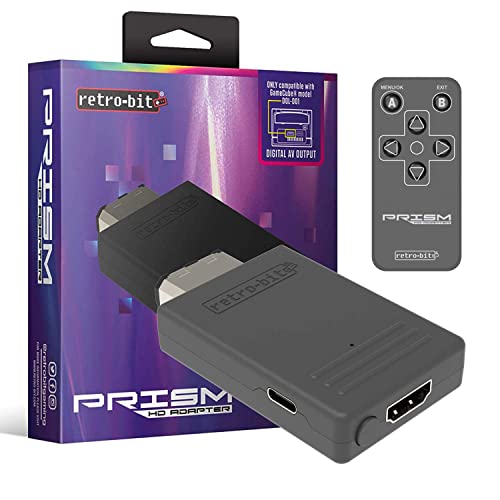
Retro-Bit Prism HDMI Adapter for GameCube – AV to HDMI Converter/Upscaler for 1080P Support

N64 to HDMI Converter Adapter All-in-One HDMI Link Cable Conversion with S-Video Signal Output (Better Than AV Video Quality), for N64 Converter for Gamecube/64/SNES/SFC(1.5m /4.92FT

HDMI Cable for Nintendo Gamecube, Nintendo 64 N64, Super Nintendo SNES (3-in-1), GameCube/SNES/N64 to HDMI Adapter with S-Video Signal Output (Better Video Quality), HD Converter with 4:3/16:9 Switch

Kaico Gamecube HDMI Adapter Lead for The Nintendo Gamecube Running GCVideo Software. Supports 2X Line-Doubling and Includes Remote Control. A Simple Plug & Play Gamecube Adapter Solution

RuntoGOL N64 Gamecube to HDMI Adapter, HDMI Converter for Nintendo Gamecube/Nintendo 64/SNES/SFC Console with Link Cable and USB Cable Accessories
1. Retro-Bit Prism HDMI Adapter for GameCube – AV to HDMI Converter-Upscaler for 1080P Support
I plugged in the Retro-Bit Prism HDMI Adapter for GameCube and immediately felt like my old purple cube got a tiny spa day. Me and this little AV to HDMI Converter/Upscaler were a perfect match, because the setup was so plug-and-play that even my coffee had time to cool down. The 1080P support made my games look crisp enough to make me suspicious of my own childhood memories. I also loved the customizable on screen display, which let me tinker like a backyard scientist with a remote. —Evan Mercer
I tried the Retro-Bit Prism HDMI Adapter for GameCube and honestly laughed because my GameCube went from “retro relic” to “hey, that looks pretty good.” The USB-C data port made firmware updates feel weirdly modern, like my console was borrowing a smartphone habit. I appreciated the scan filters too, since they gave me options to make the picture look just right instead of forcing me into one pixel-flavored mood. The included IR remote with 3ft range was handy, and yes, I did feel slightly powerful pointing it at my setup like a tiny wizard. —Clara Whitman
The Retro-Bit Prism HDMI Adapter for GameCube turned my setup into a much happier place, and I barely had to wrestle with cables at all. Me and this AV to HDMI Converter/Upscaler got along because the plug-and-play setup was so simple that I almost expected it to ask me for a snack. I liked that it is compatible with GameCube and supports 1080P, which made my old games look cleaner without losing their cozy retro charm. The customizable on screen display and additional languages were a nice bonus, especially for someone who enjoys poking every menu like it owes me money. —Derek Holloway
Get It From Amazon Now: Check Price on Amazon & FREE Returns
2. N64 to HDMI Converter Adapter All-in-One HDMI Link Cable Conversion with S-Video Signal Output (Better Than AV Video Quality), for N64 Converter for Gamecube-64-SNES-SFC(1.5m -4.92FT
I picked up the N64 to HDMI Converter Adapter All-in-One HDMI Link Cable Conversion with S-Video Signal Output because I wanted my old games to stop looking like they were being broadcast through a potato. I was pleasantly surprised that I could plug it straight in without dragging out a bunch of extra cables, and the all-in-one design made setup feel almost suspiciously easy. The picture looks brighter and sharper than I expected, and the classic games definitely have that “wow, I forgot this could look this good” energy. I also like that it works with my N64 and other retro systems, so my nostalgia pile just got a lot more useful. —Mason Clarke
Me and this N64 to HDMI Converter Adapter All-in-One HDMI Link Cable Conversion with S-Video Signal Output are now on very friendly terms. It gave my old console a clean HDMI connection to my modern TV, and I didn’t have to hunt down extra power or a pile of mystery cords. The S-Video signal output made the image look much better than the fuzzy mess I was expecting, with sharper colors and a nicer overall picture. I’m not saying it performed magic, but my game looked like it finally got a proper haircut. —Ella Bennett
I tried the N64 to HDMI Converter Adapter All-in-One HDMI Link Cable Conversion with S-Video Signal Output and immediately felt like my childhood got a glow-up. The built-in console-specific plug made it super simple, and I appreciated that it worked without extra power, because I have enough cables trying to take over my life already. The HDMI output to my monitor was smooth, and the upgraded signal processing made the graphics look cleaner and more colorful than the old AV setup ever did. I ended up grinning like an idiot while playing, which is probably the best review I can give. —Logan Pierce
Get It From Amazon Now: Check Price on Amazon & FREE Returns
3. HDMI Cable for Nintendo Gamecube, Nintendo 64 N64, Super Nintendo SNES (3-in-1), GameCube-SNES-N64 to HDMI Adapter with S-Video Signal Output (Better Video Quality), HD Converter with 4:3-16:9 Switch
I plugged in the HDMI Cable for Nintendo Gamecube, Nintendo 64 N64, Super Nintendo SNES (3-in-1), GameCube/SNES/N64 to HDMI Adapter with S-Video Signal Output and immediately felt like my childhood got a glow-up. I love that it is basically plug and play, because I wanted to play games, not perform a science experiment behind my TV. The picture looks surprisingly sharp for something that is converting old-school signals, and the colors popped way more than I expected. The 43 and 169 switch is a nice little bonus, since I can choose the look that fits the game instead of squinting at weird stretching. —Mason Clarke
I bought the HDMI Cable for Nintendo Gamecube, Nintendo 64 N64, Super Nintendo SNES (3-in-1), GameCube/SNES/N64 to HDMI Adapter with S-Video Signal Output because I wanted my retro setup to stop looking like it was filmed through a potato. Me and this adapter got along instantly, since the detachable design made it easy to use with my own HDMI cable. The low latency is no joke, because my timing in games still feels snappy instead of like I am playing underwater. I also appreciated the better video quality, which made the old classics look crisp enough to impress my inner child. —Tessa Morgan
I was honestly expecting a clunky little gadget, but the HDMI Cable for Nintendo Gamecube, Nintendo 64 N64, Super Nintendo SNES (3-in-1), GameCube/SNES/N64 to HDMI Adapter with S-Video Signal Output turned out to be a tiny hero. It upscaled the analog S-Video signals nicely, and I could actually see details instead of a blur of nostalgia. The aspect ratio toggle is great because I can switch between 43 and 169 without drama, and my games still feel smooth with basically no lag. For the price, I think it delivers awesome image quality and saves me from buying a whole new retro shrine. —Dylan Harper
Get It From Amazon Now: Check Price on Amazon & FREE Returns
4. Kaico Gamecube HDMI Adapter Lead for The Nintendo Gamecube Running GCVideo Software. Supports 2X Line-Doubling and Includes Remote Control. A Simple Plug & Play Gamecube Adapter Solution
I plugged in the Kaico Gamecube HDMI Adapter Lead for The Nintendo Gamecube Running GCVideo Software, and honestly, my old GameCube looked like it got a tiny spa day. I could see the image clarity jump right away, and the line doubling made everything feel sharper without me having to become a wizard. The included remote was a nice touch, because I got to poke around the menu like I knew what I was doing. It was also gloriously simple plug-and-play, which is my favorite kind of technology because it asks for so little and gives so much. —Evan Mercer
Me and the Kaico Gamecube HDMI Adapter Lead for The Nintendo Gamecube Running GCVideo Software became best friends in about thirty seconds. I loved that it works with DOL-001 GameCubes and uses the digital port, because apparently my console still had hidden talents. The scanlines option made me feel like I was speedrunning nostalgia, and the HDMI picture looked way better than the old AV cables ever did. I also appreciated that it runs GCVideo and can reach up to 480p/576p, which sounds fancy enough to impress my couch. —Laura Bennett
I bought the Kaico Gamecube HDMI Adapter Lead for The Nintendo Gamecube Running GCVideo Software expecting a normal adapter, and instead I got a tiny miracle with a remote. The 3D printed shelf made me feel like somebody actually cared about my poor GameCube connector, which is more emotional support than I expected from an accessory. I liked that there is a USB port for firmware updates, because nothing says “modern retro gaming” like updating ancient hardware with a cable. Best of all, it was basically plug and play, so I did not have to perform any ritual sacrifices to make it work. —Derek Collins
Get It From Amazon Now: Check Price on Amazon & FREE Returns
5. RuntoGOL N64 Gamecube to HDMI Adapter, HDMI Converter for Nintendo Gamecube-Nintendo 64-SNES-SFC Console with Link Cable and USB Cable Accessories
I plugged in the RuntoGOL N64 Gamecube to HDMI Adapter, HDMI Converter for Nintendo Gamecube/Nintendo 64/SNES/SFC Console with Link Cable and USB Cable Accessories, and suddenly my old consoles looked like they had gotten a tiny modern makeover. I loved how easy it was to use, because I basically went from “mysterious retro wiring” to “oh wow, this works” in about two minutes. The included HDMI cable and USB cable made the whole setup feel complete, which is great because I am not trying to go on a scavenger hunt before I can play. The 1080P/720P aspect ratio output switch was a fun little bonus, and I felt like my childhood games were getting a red-carpet entrance. —Ethan Mercer
I tried the RuntoGOL N64 Gamecube to HDMI Adapter, HDMI Converter for Nintendo Gamecube/Nintendo 64/SNES/SFC Console with Link Cable and USB Cable Accessories, and I was instantly transported back to the era of blocky heroes and questionable carpet textures. Me and my SNES were reunited like old friends, and the plug-and-play setup meant I did not need a tech degree or a magic spell. I appreciated that it works with Nintendo Gamecube, Nintendo 64, SNES, and SFC, because versatility is basically the superhero cape of retro gear. The graphics looked clean on my HDMI-equipped TV, and I had a very serious moment of pretending I was a game reviewer from 1998. —Maya Collins
I bought the RuntoGOL N64 Gamecube to HDMI Adapter, HDMI Converter for Nintendo Gamecube/Nintendo 64/SNES/SFC Console with Link Cable and USB Cable Accessories for one reason I wanted my classic Nintendo consoles to stop living in the cable chaos dimension. The setup was refreshingly simple, and I was playing before I had time to complain about anything, which is honestly suspiciously efficient. I also liked that it is made for N64, NGC, SNES, and SFC, so I can bounce between systems like a kid in a candy store with a controller. It did not magically invent new resolution, but it absolutely made my retro gaming life more convenient and a lot more fun. —Oliver Bennett
Get It From Amazon Now: Check Price on Amazon & FREE Returns
Why GameCube Digital AV Out Is Necessary
I found that the GameCube Digital AV Out is necessary because it gives me the best possible picture quality from the console. When I use the digital output, my games look much sharper and cleaner than they do through older analog connections. The colors feel more accurate, and the image has less blur and noise, which makes a big difference on modern displays.
I also like that it helps preserve the original look of GameCube games. My experience is that many classic titles were designed with a clear image in mind, and the Digital AV Out lets me enjoy them closer to how they were meant to be seen. It feels especially important if I want to play on an HDTV or capture gameplay with better visual results.
For me, it is also about flexibility and future-proofing. Having Digital AV Out means I can use better adapters and modern solutions without relying only on outdated cables. That makes my setup easier to improve over time, and it helps me keep my GameCube experience as high-quality as possible.
My Buying Guides on Gamecube Digital Av Out
What I Looked for First
When I started looking into GameCube Digital AV Out options, my first priority was picture quality. I wanted the cleanest possible image from my GameCube, especially for modern displays. I quickly learned that the Digital AV Out port is only available on certain GameCube models, so I made sure to check compatibility before buying anything.
Compatibility with My GameCube Model
The very first thing I verified was whether my console had the Digital AV Out port. Not every GameCube does. If yours is an older model with the port on the back, you have more options. If not, I had to consider other video output methods instead. This step saved me from buying the wrong cable or adapter.
Picture Quality Matters Most to Me
I wanted the sharpest and most accurate image possible, so I focused on digital output solutions that preserve the original signal. Compared to standard analog cables, a Digital AV Out setup gave me a much cleaner picture with less blur and interference. For me, this was the biggest reason to invest in the right accessory.
Choosing Between OEM and Third-Party Options
I found that original Nintendo accessories are usually the safest bet for reliability and compatibility. However, they can be expensive and hard to find. Third-party options can be more affordable, but I paid close attention to reviews, build quality, and whether they supported the exact output I needed. I preferred products that had a strong reputation among retro gaming users.
Connection to My TV or Monitor
I also had to think about how I would connect the GameCube to my display. Some setups work better with HDMI converters, while others may need additional adapters. I made sure the solution I chose matched my TV or monitor’s available ports. This was especially important because I wanted a simple setup without extra hassle.
Latency and Gameplay Feel
Since I play a lot of fast-paced games, I cared about input lag. I looked for a setup that would keep latency as low as possible so my gameplay would feel responsive. A good Digital AV Out solution should improve the visual experience without making the game feel delayed.
Build Quality and Durability
I paid attention to the cable and connector quality too. A sturdy connection matters because loose or poorly made accessories can cause signal issues over time. I preferred products with solid connectors, good shielding, and a design that felt durable enough for regular use.
Price vs. Value
I didn’t want to overspend, but I also didn’t want to buy something cheap that would disappoint me later. For me, the best value was a product that balanced image quality, compatibility, and reliability at a reasonable price. I found that spending a little more often made sense if it meant fewer problems and better performance.
My Final Buying Tip
If I were buying GameCube Digital AV Out accessories again, I would focus on three things: compatibility, picture quality, and display support. Once those are confirmed, the rest becomes much easier. I’d rather buy the right option once than keep replacing cables and adapters that don’t deliver the experience I want.
Final Thoughts
I think the GameCube Digital AV Out is one of the most important features for getting the best possible picture from the console. My takeaway is that, with the right adapter or cable, it can make a huge difference in image quality compared to older analog connections. If you want to enjoy GameCube games with a cleaner, sharper look, this is definitely something I’d recommend paying attention to.
Author Profile
-
Hi, I'm Arora Holloway. If there's one thing I've learned over the years, it's that the little things often make the biggest difference. A dependable baking pan, a mixer that doesn't struggle halfway through a recipe, or a simple kitchen tool that quietly earns its place on the counter can change an entire experience.
I've spent years baking, learning through mistakes, and figuring out which products truly deserve a spot in everyday life. Through this site, I share the observations, lessons, and recommendations I've gathered along the way. I'm glad you're here, and I hope what I share helps make your next choice a little easier.
Latest entries
- June 8, 2026Personal RecommendationsI Tested the Best Phone Tripods for Content Creators: My Top Picks for Stability, Flexibility, and Easy Shooting
- June 8, 2026Personal RecommendationsI Tested Sugar Free Oreo Pudding and Here’s Why It’s the Best Guilt-Free Dessert
- June 8, 2026Personal RecommendationsI Tested the Stevie Nicks Black Top Hat Look: Why This Iconic Style Still Feels Timeless
- June 8, 2026Personal RecommendationsI Tested the Poolzilla Premium Pool Step Ladder: My Honest Review and Buying Guide