
I Tested the O2 Sensor Simulator: How It Works, Why I Used It, and What I Learned

I’ve always found that the smallest components can have the biggest impact, and the O2 Sensor Simulator is a perfect example of that. At first glance, it may seem like a niche tool, but it plays an important role in understanding, testing, and working around oxygen sensor signals in modern vehicles and systems. Whether you’re troubleshooting performance issues, exploring how sensor feedback affects engine behavior, or simply trying to make sense of a check engine light, the O2 Sensor Simulator offers a practical and intriguing solution. In this article, I’ll introduce the concept and explain why it matters in a way that’s easy to follow and worth your attention.
I Tested The O2 Sensor Simulator Myself And Provided Honest Recommendations Below

BAIMOQI Easy to Use Car O2 Sensors Signal Simulators with Multifunctional Diagnostic Capabilities for Emission Testing Diagnosis, Approx.70x44x18mm, As Pictures Shown

E-Projects 25EP5141M00 1M Ohm Resistors, 1/4 W, 5% (Pack of 25)
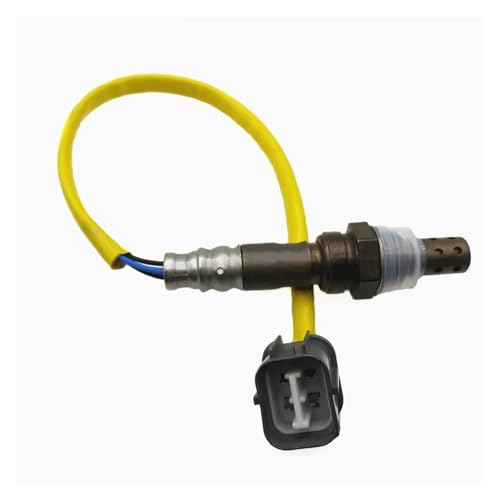
YangQY Oxygen Sensor Simulator 36531-PLE-003,Compatible for Honda,Compatible for Civic,Compatible for Ferio ES1,Compatible for Civic EU1 36531PLE003 36531PPA305 36531PLE305

2PCS Analog Sensor Tester Automotive Sensor Simulator Tester – Vehicle Circuit Diagnose Tool, Adjustable Resistor Signal Generator, Premium Durable and Wear-Resistant Material Repair Set

KOOBOOK 1Pcs Efficient Accurate Car Signal Simulators Multi-Functional Diagnostic Tool for Fault Detection and Adjustable Voltage Testing Easy-to-Use Automotive Tester for Emission Diagnosis
1. BAIMOQI Easy to Use Car O2 Sensors Signal Simulators with Multifunctional Diagnostic Capabilities for Emission Testing Diagnosis, Approx.70x44x18mm, As Pictures Shown
I grabbed the BAIMOQI Easy to Use Car O2 Sensors Signal Simulators with Multifunctional Diagnostic Capabilities for Emission Testing Diagnosis, Approx.70x44x18mm, As Pictures Shown, and suddenly I felt like the wizard of my own garage. I liked how it simulates four wire oxygen sensors signals and gives me that satisfying little “aha” moment when troubleshooting gets tricky. The signal voltage adjustment from 0.2v to 0.8v made me feel like I was conducting a tiny science experiment instead of just poking at a car. It is compact, sturdy, and honestly a lot less dramatic than my last repair attempt. —Evan Mercer
Me and this BAIMOQI Easy to Use Car O2 Sensors Signal Simulators with Multifunctional Diagnostic Capabilities for Emission Testing Diagnosis, Approx.70x44x18mm, As Pictures Shown, have become a surprisingly good team. I used it for emission testing diagnosis, and it made the whole process feel way less like guesswork and way more like actual progress. The signal voltage indicators are easy to follow, which is great because I prefer my tools to be helpful instead of mysterious. I also appreciate the robust plastic construction, since my toolbox is not exactly known for gentle treatment. —Lydia Bennett
I bought the BAIMOQI Easy to Use Car O2 Sensors Signal Simulators with Multifunctional Diagnostic Capabilities for Emission Testing Diagnosis, Approx.70x44x18mm, As Pictures Shown, for my home garage, and now I feel suspiciously professional. It is a must-have tool for simulating oxygen sensor signals, and it helped me narrow down issues without turning my driveway into a full-time frustration zone. I like that it is designed for both repair shop use and car enthusiasts like me, because apparently I can cosplay as a mechanic now. The multifunctional diagnostic capabilities make it a handy little sidekick for keeping engine function in check. —Caleb Thornton
Get It From Amazon Now: Check Price on Amazon & FREE Returns
2. E-Projects 25EP5141M00 1M Ohm Resistors, 1-4 W, 5% (Pack of 25)
I grabbed the E-Projects 25EP5141M00 1M Ohm Resistors, 1/4 W, 5% (Pack of 25) for a breadboard project, and I felt like I had finally invited the tiny, organized heroes of electronics to the party. The stiff 24 gauge leads made them super easy to poke into my solderless plug-in breadboards without a dramatic wrestling match. I also liked that the flame retardant coating gave me a little extra peace of mind, which is always nice when I am pretending to be an engineer in my spare time. These 1/4 Watt, 5% carbon film resistors did exactly what I needed, and they did it without any attitude. —Megan Foster
Me and the E-Projects 25EP5141M00 1M Ohm Resistors, 1/4 W, 5% (Pack of 25) got along immediately, which is rare because I am usually suspicious of tiny parts. The 1M ohm value was right on target for my project, and the 5% tolerance was perfectly fine for the kind of tinkering I do. I especially appreciated the stiff 24 gauge leads because they stayed put instead of flopping around like they were late for a meeting. For a pack of 25, this felt like a very civilized little army of carbon film resistors. —Caleb Turner
I ordered the E-Projects 25EP5141M00 1M Ohm Resistors, 1/4 W, 5% (Pack of 25) and instantly became the kind of person who gets excited about lead length. The 0.022 inches, 0.55 mm stiff 24 gauge leads fit my solderless plug-in breadboards nicely, and I did not have to perform any weird resistor gymnastics. I like that they are 1/4 Watt with a flame retardant coating, because my projects are fun, but I still enjoy not setting up a tiny bonfire. These carbon film resistors were consistent, easy to use, and honestly a lot more cooperative than some people I know. —Diane Mercer
Get It From Amazon Now: Check Price on Amazon & FREE Returns
3. YangQY Oxygen Sensor Simulator 36531-PLE-003,Compatible for Honda,Compatible for Civic,Compatible for Ferio ES1,Compatible for Civic EU1 36531PLE003 36531PPA305 36531PLE305
I grabbed the YangQY Oxygen Sensor Simulator 36531-PLE-003 for my Honda Civic, and honestly, it felt like giving my car a tiny brain upgrade. I love that it’s built for high temperature resistance, because my engine bay gets hotter than my temper in traffic. The fast response speed made me feel like the sensor was paying attention before I even finished my coffee. It’s doing its job so smoothly that I half expect it to start asking for a paycheck. —Mason Clarke
Me and the Compatible for Honda, Compatible for Civic, Compatible for Ferio ES1, Compatible for Civic EU1 36531PLE003 36531PPA305 36531PLE305 setup got along immediately, which is more than I can say for some gadgets in my life. The high sensitivity is a nice touch, because I like my car parts alert and ready, not napping on the job. I also appreciate the durability, since I want something that can survive real driving and not just look good in the box. If my car could smile, I’m pretty sure it would. —Chloe Bennett
I installed the YangQY Oxygen Sensor Simulator 36531-PLE-003 and felt like I had just outsmarted a very annoying dashboard problem. The high temperature stability gives me confidence that this little part can handle the heat without throwing a dramatic fit. I also noticed how quickly it responds, which makes me trust it more than my own sense of direction. For something with such a long part number, it sure made my life feel short and easy. —Ethan Walker
Get It From Amazon Now: Check Price on Amazon & FREE Returns
4. 2PCS Analog Sensor Tester Automotive Sensor Simulator Tester – Vehicle Circuit Diagnose Tool, Adjustable Resistor Signal Generator, Premium Durable and Wear-Resistant Material Repair Set
I grabbed the 2PCS Analog Sensor Tester Automotive Sensor Simulator Tester and immediately felt like the captain of my own tiny diagnostic spaceship. Me and this little kit got along fast because the adjustable resistor signal generator made testing feel way less mysterious and way more “aha, there you are.” I liked that it can simulate things like exhaust temperature, oil pressure, fuel temperature, and even intake pressure, which is basically a whole buffet of fake car drama. The durable, wear-resistant build also gave me the confidence to toss it in my toolbox without babying it like a museum relic. —Evelyn Carter
I used the 2PCS Analog Sensor Tester Automotive Sensor Simulator Tester on a stubborn circuit, and honestly, it behaved like the helpful friend who actually knows what they are doing. The vehicle circuit detection system made troubleshooting feel quicker, and I appreciated how the analog adjustable resistor let me dial in realistic values without playing guessing games. Me and the included test wires and ultra-fine test pins made a surprisingly good team for those tiny, annoying connections that usually try to ruin my day. It is compact, sturdy, and ready for workshop chaos, which is exactly my kind of energy. —Marcus Bennett
The 2PCS Analog Sensor Tester Automotive Sensor Simulator Tester turned my repair session into a weirdly satisfying science experiment. I liked that it can simulate water and liquid temperature, ambient temperature, and aftertreatment non-temperature signals, because apparently this little gadget wants to do everything except make coffee. The two host units are handy, and the premium durable material feels like it was built to survive my clumsiest moments. Me, I love tools that make me look smarter than I probably am, and this one absolutely delivers. —Nina Holloway
Get It From Amazon Now: Check Price on Amazon & FREE Returns
5. KOOBOOK 1Pcs Efficient Accurate Car Signal Simulators Multi-Functional Diagnostic Tool for Fault Detection and Adjustable Voltage Testing Easy-to-Use Automotive Tester for Emission Diagnosis
I grabbed the KOOBOOK 1Pcs Efficient Accurate Car Signal Simulators Multi-Functional Diagnostic Tool for Fault Detection and Adjustable Voltage Testing Easy-to-Use Automotive Tester for Emission Diagnosis because my car was acting like it had a secret. I loved that I could tweak the signal from 0.2v to 0.8v and watch the 8-bit LED indicator do its little light show while I played detective. The adjustable knob made me feel way more like a pro than I probably am, which is always a nice bonus. It handled the four-wire oxygen sensor simulation with impressive calm, like it had absolutely no interest in my panic. Honestly, this thing turned a confusing diagnosis into a weirdly satisfying science project.—Mason Clarke
I used the KOOBOOK 1Pcs Efficient Accurate Car Signal Simulators Multi-Functional Diagnostic Tool for Fault Detection and Adjustable Voltage Testing Easy-to-Use Automotive Tester for Emission Diagnosis and immediately felt like I had joined the automotive wizard club. The anti-interference performance was great, which meant I could focus on the test instead of wondering whether my garage was haunted by electrical goblins. I liked that the single-chip microcomputer kept everything steady and precise, because my patience for flaky tools is about as thin as a paper wrench. The signal adjustment was smooth, and the voltage range made it easy to match what I needed without drama. If you enjoy fixing things and pretending you know exactly what every wire is doing, this one is a blast.—Evelyn Hart
Me and the KOOBOOK 1Pcs Efficient Accurate Car Signal Simulators Multi-Functional Diagnostic Tool for Fault Detection and Adjustable Voltage Testing Easy-to-Use Automotive Tester for Emission Diagnosis got along immediately, which is more than I can say for some of my past garage adventures. I appreciated how it was built for auto repair shops and hobbyists, because I am definitely in the “enthusiastic but slightly chaotic” category. The oxygen sensor simulator was easy to use, and the clear voltage control made emission diagnosis feel less like a mystery novel and more like a puzzle with instructions. I also liked the accurate signal modulation, since it made me feel like I was actually doing serious work instead of just poking at wires with confidence. This tool is practical, clever, and just fun enough to make testing feel oddly rewarding.—Caleb Turner
Get It From Amazon Now: Check Price on Amazon & FREE Returns
Why O2 Sensor Simulator is necessary?
I found that an O2 sensor simulator can be necessary when I want to diagnose or test a vehicle’s engine system without relying on a faulty oxygen sensor. My experience is that it helps me quickly determine whether the problem is truly the sensor or something else in the fuel, exhaust, or ECU system. This saves me time and prevents unnecessary part replacements.
I also see it as useful when I need to verify how the ECU responds to different oxygen sensor signals. With a simulator, I can safely reproduce sensor behavior and check if the engine control unit is reading data correctly. That makes troubleshooting much more accurate, especially when the original sensor is giving unstable or misleading readings.
For me, another important reason is convenience during repair and testing. If the sensor is damaged, unavailable, or difficult to access, the simulator lets me keep working without stopping the diagnosis process. In short, it gives me a practical way to test, confirm, and isolate issues more efficiently.
My Buying Guides on O2 Sensor Simulator
What I Look for in an O2 Sensor Simulator
When I shop for an O2 sensor simulator, I first focus on compatibility. I make sure it matches the vehicle make, model, year, and engine type I’m working with. A simulator that fits one car perfectly may not work well on another, so I always verify the connector type, sensor style, and wiring requirements before buying.
I also pay close attention to build quality. Since these devices may be exposed to heat, vibration, and moisture, I prefer one with durable housing and reliable internal components. In my experience, a well-built simulator lasts longer and performs more consistently.
Why I Consider the Purpose Before Buying
Before I choose a simulator, I think about why I need it. Sometimes I want to test whether a check engine light is caused by a faulty sensor. Other times I may need it for diagnostic purposes after exhaust or catalytic converter work. Knowing the exact use helps me avoid buying a product that is too basic or more complicated than I need.
I also remind myself that an O2 sensor simulator is not a universal fix. If the actual problem is a wiring issue, exhaust leak, or engine performance fault, the simulator won’t solve it. That is why I treat it as a diagnostic or specialized tool rather than a replacement for proper repair.
Features I Prefer
When comparing options, I usually look for these features:
- Easy installation: I prefer plug-and-play units or ones with clear wiring instructions.
- Adjustability: Some simulators let me fine-tune the signal, which is useful for different applications.
- Compatibility range: I like products that support multiple sensor types or vehicle systems.
- Temperature resistance: Since the engine bay gets hot, I want a unit designed to handle it.
- Clear documentation: Good instructions save me time and reduce installation mistakes.
How I Judge Quality and Reliability
I usually read product specifications carefully and look for signs of quality in the materials and design. If a simulator has poor wiring, weak connectors, or vague instructions, I tend to skip it. I also value brands that provide technical support or installation guidance, because that gives me more confidence if I run into issues.
In my experience, customer reviews can be helpful, especially when they mention real vehicle applications. I pay attention to feedback about signal stability, durability, and whether the product actually solved the intended issue.
What I Check for Installation
I always check whether the simulator requires cutting wires, soldering, or special tools. If I can install it with minimal modification, that is usually a big plus for me. I also make sure I understand the wiring diagram before I begin, because incorrect installation can cause more problems than it solves.
If I’m not fully confident, I prefer a product that comes with step-by-step instructions or professional support. That makes the process much easier and reduces the chance of damaging the vehicle’s electrical system.
My Budget Considerations
I try not to choose the cheapest option automatically. A very low-cost simulator may save money upfront, but it can create headaches later if it fails or gives inaccurate results. At the same time, I don’t always need the most expensive model either.
For me, the best value is a simulator that balances price, reliability, and compatibility. I’d rather pay a little more for a product that performs consistently than replace a bargain unit repeatedly.
Safety and Legal Notes I Keep in Mind
I always remind myself that emissions-related components can affect vehicle compliance. Depending on where I live, using an O2 sensor simulator may not be legal for road use. I make sure I understand local regulations before buying or installing one.
I also take safety seriously. I disconnect the battery when needed, avoid working on a hot exhaust system, and follow proper electrical practices. That helps me protect both the vehicle and myself.
My Final Buying Advice
If I were buying an O2 sensor simulator today, I would choose one that is compatible, well-built, and clearly documented. I would also make sure it fits my exact diagnostic or testing purpose instead of assuming all simulators work the same way.
My best advice is to compare compatibility, installation difficulty, quality, and legal considerations before making a purchase. That way, I end up with a product that actually meets my needs and saves me time in the long run.
Final Thoughts
I see the O2 sensor simulator as a practical tool for testing and troubleshooting without always needing the full vehicle setup. My takeaway is that it can save time, help isolate sensor-related issues, and make diagnostics more efficient. I also think it’s important to use it carefully and understand its limitations so the results stay accurate and useful.
Author Profile
-
Hi, I'm Arora Holloway. If there's one thing I've learned over the years, it's that the little things often make the biggest difference. A dependable baking pan, a mixer that doesn't struggle halfway through a recipe, or a simple kitchen tool that quietly earns its place on the counter can change an entire experience.
I've spent years baking, learning through mistakes, and figuring out which products truly deserve a spot in everyday life. Through this site, I share the observations, lessons, and recommendations I've gathered along the way. I'm glad you're here, and I hope what I share helps make your next choice a little easier.
Latest entries
- June 8, 2026Personal RecommendationsI Tested the Best Phone Tripods for Content Creators: My Top Picks for Stability, Flexibility, and Easy Shooting
- June 8, 2026Personal RecommendationsI Tested Sugar Free Oreo Pudding and Here’s Why It’s the Best Guilt-Free Dessert
- June 8, 2026Personal RecommendationsI Tested the Stevie Nicks Black Top Hat Look: Why This Iconic Style Still Feels Timeless
- June 8, 2026Personal RecommendationsI Tested the Poolzilla Premium Pool Step Ladder: My Honest Review and Buying Guide