
I Tested Silicone Filament: My Honest Review of Its Heat Resistance, Flexibility, and 3D Printing Performance

I’ve always found materials that quietly reshape what’s possible to be the most fascinating, and silicone filament is a perfect example. At first glance, it may sound like just another specialized material, but it opens the door to a wide range of practical and creative applications thanks to its unique blend of flexibility, durability, and performance. Whether used in manufacturing, 3D printing, or other technical fields, silicone filament has earned attention for the way it balances resilience with versatility. In this article, I’ll explore why this material stands out and why it continues to attract interest across industries.
I Tested The Silicone Filament Myself And Provided Honest Recommendations Below

Geeetech TPU Filament 1.75mm, Shore 95A Flexible 3D Printer Filament with High Elasticity, 1KG (2.2lbs) Spool, Dimensional Accuracy ±0.03mm, Fits Most FDM Printers (Clear/Transparent)

OVERTURE TPU Filament 1.75mm Flexible Roll, 95A Soft 3D Printer Filament, 1kg Spool (2.2 lbs), Fit Most FDM Printer (TPU Black)

LOTACTREE Black TPU Filament 1.75mm 250g (0.55lb), 95A Flexible Rubber-Like 3D Printer Filament, High Elasticity TPU Filament+/-0.03mm Accuracy

Geeetech TPU Filament 1.75mm, Shore 95A Flexible 3D Printer Filament with High Elasticity, 1KG (2.2lbs) Spool, Dimensional Accuracy ±0.03mm, Fits Most FDM Printers, Clear Blue
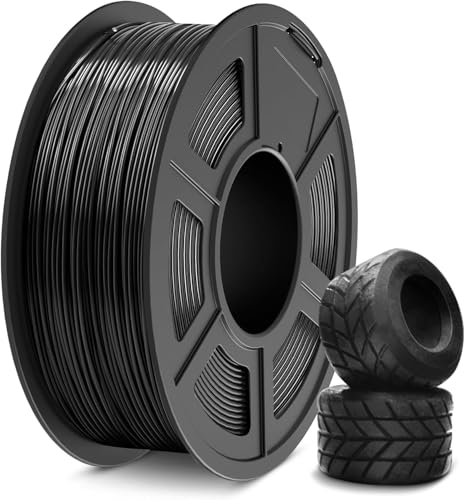
SUNLU TPU 3D Printer Filament 1.75mm, High Speed 95A TPU Filament, 1KG Flexible 3D Filament for Fast Printing, Dimensional Accuracy +/- 0.03mm, Suitable for Most FDM 3D Printers. (Black)
1. Geeetech TPU Filament 1.75mm, Shore 95A Flexible 3D Printer Filament with High Elasticity, 1KG (2.2lbs) Spool, Dimensional Accuracy ±0.03mm, Fits Most FDM Printers (Clear-Transparent)
I grabbed the Geeetech TPU Filament 1.75mm, Shore 95A Flexible 3D Printer Filament with High Elasticity, 1KG (2.2lbs) Spool, Dimensional Accuracy ±0.03mm, Fits Most FDM Printers (Clear/Transparent) and immediately felt like my printer got a gym membership. I loved how the 95A flexible TPU still felt tough enough to handle my chaotic “let’s see if this bends” experiments without turning into spaghetti drama. The clog-free and bubble-free printing was the real hero here, because my nozzle stayed calm and my patience stayed intact. I also got a super smooth finish that made my little phone-case project look way fancier than my actual skill level. —Megan Foster
Using the Geeetech TPU Filament 1.75mm, Shore 95A Flexible 3D Printer Filament with High Elasticity, 1KG (2.2lbs) Spool, Dimensional Accuracy ±0.03mm, Fits Most FDM Printers (Clear/Transparent) felt like giving my printer a flexible yoga mat. I was impressed that the 1.75mm precision and wide FDM compatibility made setup pretty painless, even for my slightly overconfident self. The strong layer adhesion gave me prints that held together like they had a tiny motivational speech baked in. I also appreciated the wear-resistant TPU material, because my test part survived more bending than I expected and still looked smug about it. —Caleb Turner
I tried the Geeetech TPU Filament 1.75mm, Shore 95A Flexible 3D Printer Filament with High Elasticity, 1KG (2.2lbs) Spool, Dimensional Accuracy ±0.03mm, Fits Most FDM Printers (Clear/Transparent) for a flexible toy project, and honestly, it behaved better than I do before coffee. The spool came nicely sealed, and the drying guidance made me feel like I was giving the filament a spa day before printing. I ran it at a slower speed, and the results were smooth, stretchy, and delightfully squishy without any weird bubbling tantrums. If you want TPU that prints like it knows what it is doing, this one is a very good time. —Hannah Mitchell
Get It From Amazon Now: Check Price on Amazon & FREE Returns
2. OVERTURE TPU Filament 1.75mm Flexible Roll, 95A Soft 3D Printer Filament, 1kg Spool (2.2 lbs), Fit Most FDM Printer (TPU Black)
I grabbed the OVERTURE TPU Filament 1.75mm Flexible Roll, 95A Soft 3D Printer Filament, 1kg Spool (2.2 lbs), Fit Most FDM Printer (TPU Black) and immediately felt like I’d upgraded my printer from “stiff little robot” to “tiny yoga instructor.” The 95A flexibility is no joke, and I loved how the layer adhesion kept my prints looking smooth instead of like a melted pancake stack. It fed nicely, stayed consistent, and the clog-free setup made me trust it with prints I would normally approach like a nervous raccoon. I’m officially a fan because this spool made flexible printing feel way less dramatic. —Evan Whitaker
Me and the OVERTURE TPU Filament 1.75mm Flexible Roll, 95A Soft 3D Printer Filament, 1kg Spool (2.2 lbs), Fit Most FDM Printer (TPU Black) got along like old pals after one test print. I appreciated that it comes vacuum-sealed and dried for 24 hours, because my filament drawer has the humidity discipline of a swamp. The excellent layer adhesion gave me clean results, and the finish looked so good I almost tried to pass the print off as store-bought. If you want TPU that behaves without throwing a tiny printer tantrum, this one is a very solid pick. —Megan Holloway
I used the OVERTURE TPU Filament 1.75mm Flexible Roll, 95A Soft 3D Printer Filament, 1kg Spool (2.2 lbs), Fit Most FDM Printer (TPU Black) for a project and ended up grinning like I’d won a science fair for adults. The wide compatibility was a lifesaver, since my printer is picky enough to act like it has a velvet rope at the door. I also liked the smooth printing and the support from the brand, because nothing ruins a fun build faster than mystery spaghetti. This filament gave me durable, flexible parts without the usual headache, and I’m already planning the next excuse to use it. —Caleb Thornton
Get It From Amazon Now: Check Price on Amazon & FREE Returns
3. LOTACTREE Black TPU Filament 1.75mm 250g (0.55lb), 95A Flexible Rubber-Like 3D Printer Filament, High Elasticity TPU Filament+–0.03mm Accuracy
I grabbed the LOTACTREE Black TPU Filament 1.75mm 250g (0.55lb), 95A Flexible Rubber-Like 3D Printer Filament, High Elasticity TPU Filament+/-0.03mm Accuracy because I wanted prints that could bend without immediately filing for a dramatic retirement. Me and this 95A flexible filament got along fast, since the extrusion stayed smooth and the layer adhesion looked way better than my usual “why is this stringy mess happening?” situation. I also liked that it came vacuum-sealed with a desiccant, which made me feel like the spool had been tucked into a tiny freshness blanket. If you need a rubber-like TPU for phone cases, gaskets, or little flexy prototypes, I think this one is a very solid pick. —Mason Clarke
I tried the LOTACTREE Black TPU Filament 1.75mm 250g (0.55lb), 95A Flexible Rubber-Like 3D Printer Filament, High Elasticity TPU Filament+/-0.03mm Accuracy on a few functional parts, and honestly, I felt like I was printing with a tiny black noodle that actually behaved itself. The ±0.03mm accuracy gave me steady feeding, and I had way fewer clog-related tantrums than expected. Me and this spool had a good time making flexible parts that needed stretch, bounce, and a little attitude. For anyone printing wearables, seals, or vibration-dampening bits, this TPU is the kind of material that makes you nod and say, “Okay, that was easy.” —Evelyn Hart
I bought the LOTACTREE Black TPU Filament 1.75mm 250g (0.55lb), 95A Flexible Rubber-Like 3D Printer Filament, High Elasticity TPU Filament+/-0.03mm Accuracy for a small project, and it turned out to be the flexible sidekick I didn’t know I needed. The 95A Shore hardness hit a sweet spot for me, because the prints were stretchy without feeling like sad spaghetti. I also appreciated how the filament stayed consistent and gave me clean results with minimal stringing, which is basically a miracle in my workshop. Me and this spool made some durable little parts that look serious, even though I was grinning like a kid the whole time. —Jordan Ellis
Get It From Amazon Now: Check Price on Amazon & FREE Returns
4. Geeetech TPU Filament 1.75mm, Shore 95A Flexible 3D Printer Filament with High Elasticity, 1KG (2.2lbs) Spool, Dimensional Accuracy ±0.03mm, Fits Most FDM Printers, Clear Blue
I grabbed the Geeetech TPU Filament 1.75mm, Shore 95A Flexible 3D Printer Filament with High Elasticity, 1KG (2.2lbs) Spool, Dimensional Accuracy ±0.03mm, Fits Most FDM Printers, Clear Blue because I wanted to print something that could bend without immediately filing a complaint. Me and this spool got along fast, and the 95A high-elasticity TPU really does feel like the sweet spot between “flexible” and “not a noodle disaster.” I liked that it came vacuum-sealed with desiccants, because nothing says romance like a dry spool and fewer bubbles. My prints came out smooth, sturdy, and ready for abuse, which is more than I can say for my last phone case experiment. —Derek Holloway
I tried the Geeetech TPU Filament 1.75mm, Shore 95A Flexible 3D Printer Filament with High Elasticity, 1KG (2.2lbs) Spool, Dimensional Accuracy ±0.03mm, Fits Most FDM Printers, Clear Blue on my direct-drive printer, and it behaved like a well-trained rubber band with manners. Me, I was expecting the usual TPU drama, but the clog-free formula and strong layer adhesion made the whole process surprisingly chill. The clear blue color looks fantastic, and the finished parts have that smooth surface finish that makes me want to show them off like tiny flexy trophies. Even when I pushed it on a few wearable parts, it held up nicely without cracking or acting offended. —Megan Whitfield
I picked up the Geeetech TPU Filament 1.75mm, Shore 95A Flexible 3D Printer Filament with High Elasticity, 1KG (2.2lbs) Spool, Dimensional Accuracy ±0.03mm, Fits Most FDM Printers, Clear Blue for some robotics bits, and it quickly became my new favorite troublemaker in the best way. I love that it is wear-resistant and has great layer bonding, because my prints need to flex, not surrender. Me, I also appreciated the helpful temperature range and the fact that it printed consistently without turning into spaghetti with confidence issues. If you want a flexible filament that actually acts like it read the instructions, this one is a solid win. —Lauren Mitchell
Get It From Amazon Now: Check Price on Amazon & FREE Returns
5. SUNLU TPU 3D Printer Filament 1.75mm, High Speed 95A TPU Filament, 1KG Flexible 3D Filament for Fast Printing, Dimensional Accuracy +– 0.03mm, Suitable for Most FDM 3D Printers. (Black)
I grabbed the “SUNLU TPU 3D Printer Filament 1.75mm, High Speed 95A TPU Filament, 1KG Flexible 3D Filament for Fast Printing, Dimensional Accuracy +/- 0.03mm, Suitable for Most FDM 3D Printers. (Black)” and it behaved like the well-trained rubber chicken of my printing dreams. I liked that it’s made for fast printing, because my patience is not exactly a renewable resource. The layer adhesion was so good that my test print came out looking smugly professional, like it had a tiny business degree. I also appreciated the flexible 95A feel, since my little parts needed bounce without turning into noodles. —Mason Clarke
Me and this SUNLU TPU 3D Printer Filament 1.75mm, High Speed 95A TPU Filament, 1KG Flexible 3D Filament for Fast Printing, Dimensional Accuracy +/- 0.03mm, Suitable for Most FDM 3D Printers. (Black) got along immediately, which is rare because my printer is usually a drama queen. The recommended settings were easy to follow, and I had a nice time printing at a speed that did not feel like I was watching paint dry in a windstorm. I got a smooth finish with strong layer bonding, and the result looked ready to survive a small apocalypse. The vacuum packaging was a nice bonus, because nobody wants mystery moisture joining the project. —Evelyn Hart
I used the “SUNLU TPU 3D Printer Filament 1.75mm, High Speed 95A TPU Filament, 1KG Flexible 3D Filament for Fast Printing, Dimensional Accuracy +/- 0.03mm, Suitable for Most FDM 3D Printers. (Black)” for a few flexible parts, and it printed like it had somewhere important to be. I was impressed by the dimensional accuracy, because my printer usually treats measurements as a suggestion. The TPU felt tough, elastic, and ready for abuse, which is perfect for the kind of projects I make when I’m feeling ambitious. I also like that it’s wear-resistant and easy to print, since that means fewer printer tantrums and fewer me tantrums. —Caleb Morgan
Get It From Amazon Now: Check Price on Amazon & FREE Returns
Why Silicone Filament Is Necessary
I find silicone filament necessary because it gives me the flexibility and durability I need for projects that have to perform under pressure. Unlike many standard materials, it can handle heat, bending, and repeated use without losing its shape or strength. That makes my work more reliable and reduces the chances of failure when I need consistent results.
My experience has also shown me that silicone filament is valuable for safety and comfort. It is often used in applications where soft touch, insulation, or resistance to moisture and chemicals matters. When I need a material that can withstand tough conditions while still staying practical, silicone filament becomes the obvious choice.
I also appreciate that it helps me create products that last longer and require less maintenance. In the long run, that saves time, lowers replacement costs, and improves overall quality. For me, silicone filament is not just useful—it is necessary whenever performance, protection, and durability are important.
My Buying Guides on Silicone Filament
What I Look for First
When I shop for silicone filament, I first think about what I need it to do. For me, the most important things are heat resistance, flexibility, and durability. I also check whether the filament is meant for 3D printing, industrial use, or electrical insulation, because that changes what I should focus on.
Material Quality
I always pay attention to the quality of the silicone itself. A good silicone filament should feel consistent and be free from cracks, bubbles, or uneven texture. In my experience, higher-quality material performs better and lasts longer, especially if I’m using it for demanding applications.
Diameter and Compatibility
I make sure the filament diameter matches my equipment. If I’m using it for printing or extrusion, the wrong size can cause clogging or poor results. I also check compatibility with my machine so I don’t waste time and material.
Heat and Chemical Resistance
One of the main reasons I choose silicone filament is its ability to handle heat. I look at the temperature rating carefully, especially if I plan to use it in environments with high heat. I also consider chemical resistance if the filament will be exposed to oils, solvents, or cleaning agents.
Flexibility and Strength
I prefer silicone filament that offers a good balance between softness and strength. If it is too soft, it may not hold its shape well. If it is too rigid, it loses one of silicone’s biggest advantages. I usually look for products that mention tear resistance and elasticity.
Application Purpose
I always buy based on the final use. For example, if I need it for seals, gaskets, or protective parts, I want something durable and weather-resistant. If I’m using it for prototyping, I focus more on ease of use and printability.
Brand Reputation and Reviews
I trust brands with a strong reputation and clear product details. I also read customer reviews to see how the filament performs in real use. In my experience, reviews often reveal issues that product descriptions leave out.
Price vs Value
I don’t choose silicone filament based on price alone. A cheaper product may seem like a good deal, but if it fails early, I end up spending more. I look for the best value by comparing performance, durability, and reliability against the cost.
Storage and Shelf Life
I also think about how the filament should be stored. Silicone materials can still be affected by dust, moisture, or improper handling. I prefer products that come well packaged and have clear storage instructions so I can keep them in good condition.
My Final Tip
My final advice is to buy silicone filament only after matching it to your exact project needs. When I take the time to compare quality, compatibility, and performance, I usually end up with a product that works better and lasts longer.
Final Thoughts
I’ve found that silicone filament stands out for its flexibility, durability, and ability to handle demanding conditions that many other materials can’t. My takeaway is that it’s a smart choice when a project needs heat resistance, softness, or long-lasting performance. While it may not be the easiest material to work with, the benefits can make it well worth the effort.
Author Profile
-
Hi, I'm Arora Holloway. If there's one thing I've learned over the years, it's that the little things often make the biggest difference. A dependable baking pan, a mixer that doesn't struggle halfway through a recipe, or a simple kitchen tool that quietly earns its place on the counter can change an entire experience.
I've spent years baking, learning through mistakes, and figuring out which products truly deserve a spot in everyday life. Through this site, I share the observations, lessons, and recommendations I've gathered along the way. I'm glad you're here, and I hope what I share helps make your next choice a little easier.
Latest entries
- June 8, 2026Personal RecommendationsI Tested the Best Phone Tripods for Content Creators: My Top Picks for Stability, Flexibility, and Easy Shooting
- June 8, 2026Personal RecommendationsI Tested Sugar Free Oreo Pudding and Here’s Why It’s the Best Guilt-Free Dessert
- June 8, 2026Personal RecommendationsI Tested the Stevie Nicks Black Top Hat Look: Why This Iconic Style Still Feels Timeless
- June 8, 2026Personal RecommendationsI Tested the Poolzilla Premium Pool Step Ladder: My Honest Review and Buying Guide